
Race to 2026 Kia WNBA MVP: Wilson, Miles, Clark on Top
As we get closer to the WNBA’s mid-year break for FIBA World Cup play, the league’s race for Most Valuable Player continues to gain some clarity…or so you’d think.
The individual talent across the league is astounding, which any long-time fan could’ve told you, but 2026 has offered a specific masterclass in proving that point. We have an excellent mix of stalwart superstardom seeking to continue their dominance, rookies taking the league by absolute storm, and players who have been managing unfortunate early-career injuries finally piecing things together on their way towards MVP contention.
These are the storylines that are shaping this year’s MVP race (so far). And, they’re what have informed this MVP ranking, in addition to statistics provided by the WNBA stats site.
All statistics provided are current through August 18, and filtered to cover players who have appeared in at least 30 games this year.
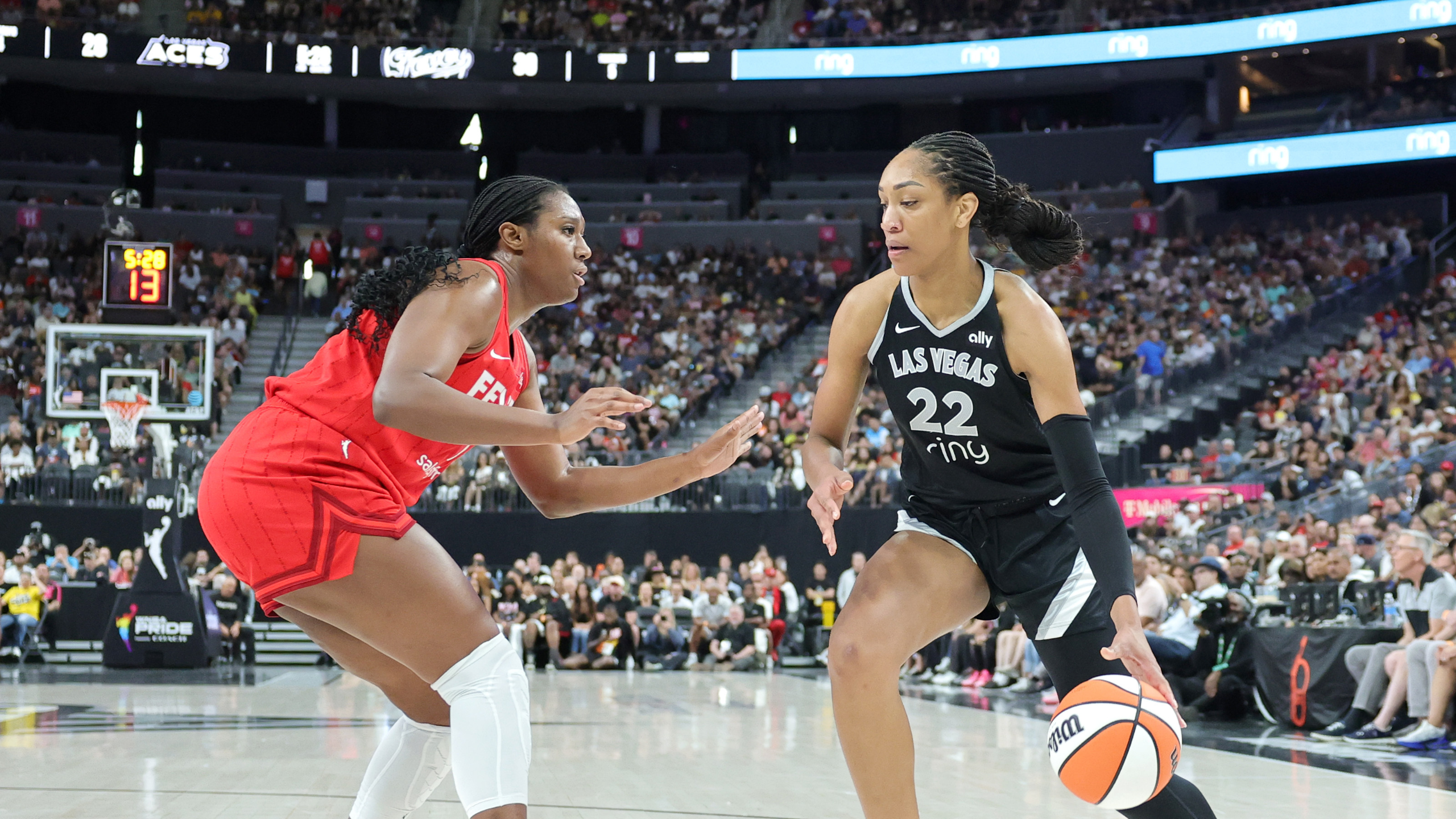
A’ja Wilson
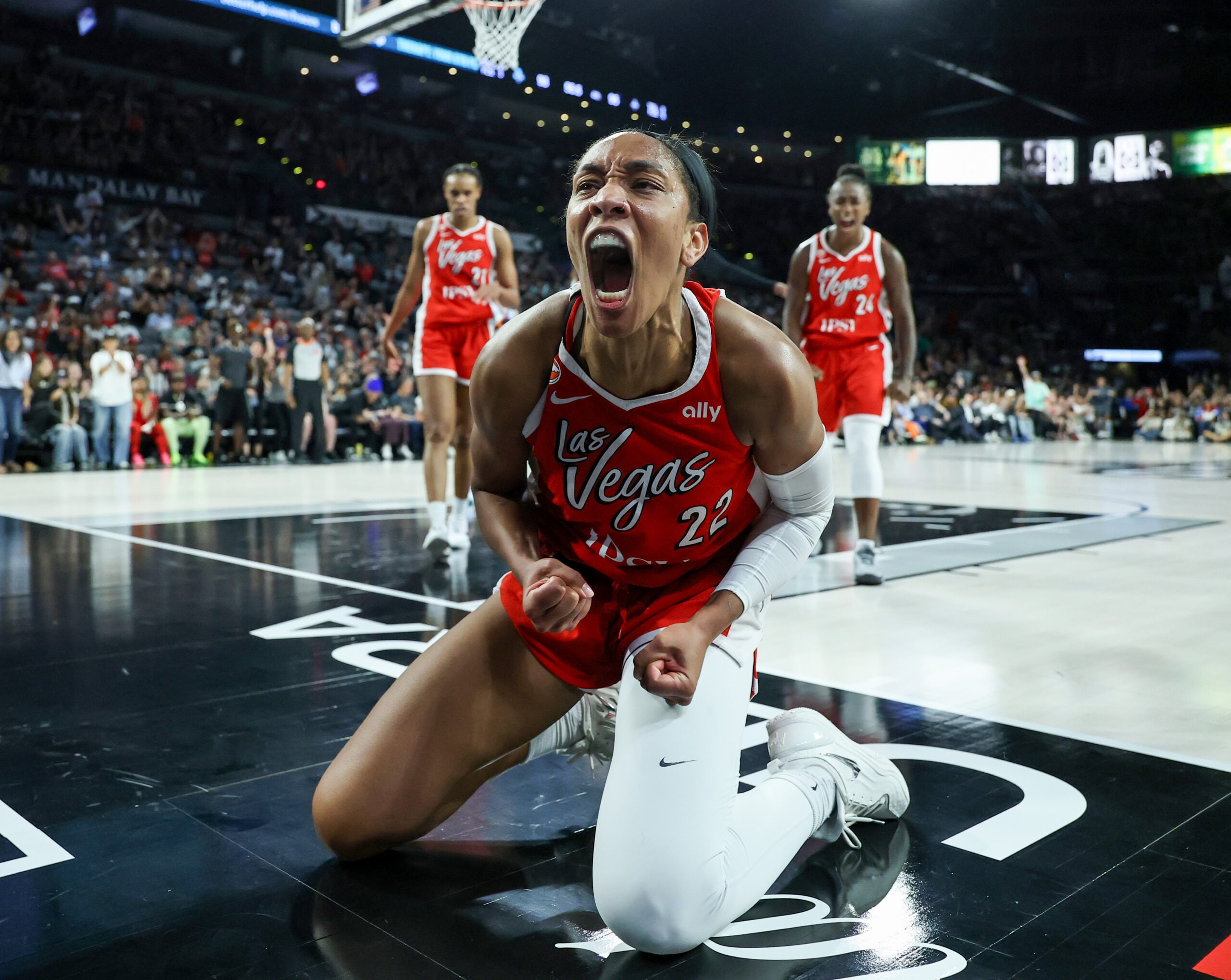
A’ja Wilson #22 of the Las Vegas Aces
This will be prefaced by saying that the race between A’ja Wilson and her closest competition for a fifth (and second consecutive) MVP award is very, very tight. Still, you’d be hard-pressed to find a two-way player quite as consistently dominant as Wilson. An on-off switch isn’t something you see in stars as easily as you do in Wilson, especially over the Aces’ last few seasons. But that’s exactly what she’s done to help keep Las Vegas chugging along as a powerhouse, exhibiting what it means to be a most valuable player.
By the numbers, Wilson is the most impactful player in the WNBA with 30 games played or more (PIE of 21.2, which measures total game points, rebounds, assists, and other in-game events relative to everyone else on the court). She has a true shooting percentage of 62, is en route to her third scoring title, and leads the Aces in usage at 32 percent (leading the league). She’s averaging 26.1 points per game along with 9.7 rebounds, 2.1 blocks, 3.1 assists, and 1.5 steals.
She could break her own scoring title record (1,021 points in 2024) this season, and would need to average at least 19 points per game to do so. As that’s her average now, it doesn’t feel far-fetched to imagine that she breaks that record with ease.
Defensively, her prowess at the rim deters teams from trying to get too much going in the paint. The Aces are averaging 5.1 blocks per game as a team, which leads the WNBA through August 18, and they’re allowing just 38.7 points in the paint per game.
Wilson’s defensive win shares of 0.130 don’t really paint the full picture as it pertains to her impact on that end of the floor. Her defensive rebounding helps keep opponents’ second-chance point opportunities lower (Las Vegas is only allowing, which, coupled with her league-leading blocks average, creates a huge advantage against almost every other center in the league.
Oh, and her on/off numbers for the Aces are stark: on the court, their net rating is 11.0. Off the court, Las Vegas’ net rating sinks to -16.6.
Wilson’s dominance has become so commonplace that it might feel…boring. And that’s a huge disservice to the value she’s had on the Aces this season. Without her on the court, they’ve gone 0-2 against teams above .500 – the New York Liberty and Indiana Fever – in blowout losses.
Las Vegas’ remaining strength of schedule is the easiest in the WNBA, which might impact her campaign slightly. Obviously, she should be expected to dominate teams such as the Connecticut Sun, Toronto Tempo, Phoenix Mercury, and Los Angeles Sparks. That doesn’t really move the needle as proof of her value to the Aces, but the rest of her season and its impact on Las Vegas’ playoff seeding should do the trick.
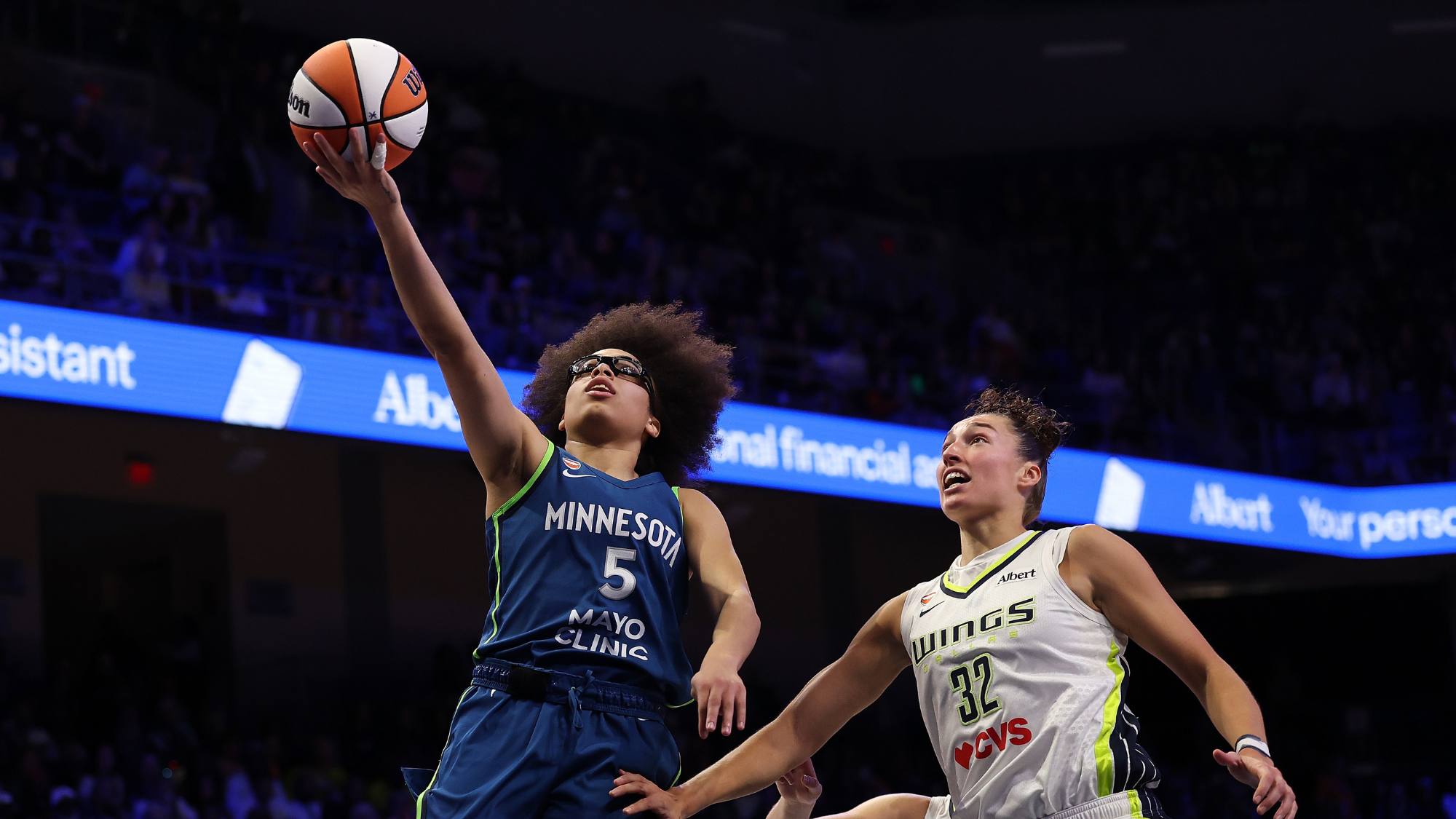
Olivia Miles
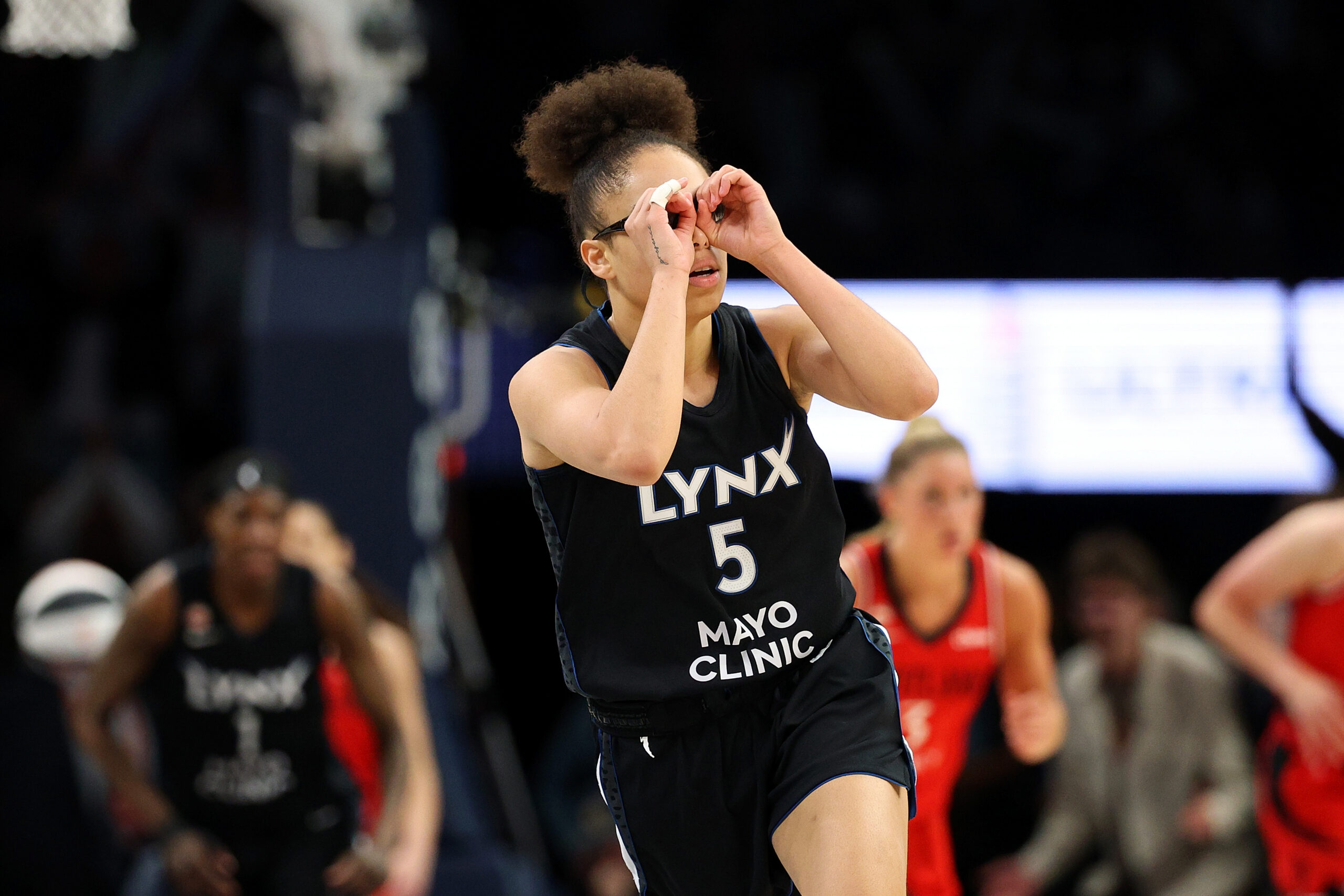
Olivia Miles #5 of the Minnesota Lynx
Olivia Miles has never seen a defensive coverage she didn’t want to take immediate advantage of, nor has she seen a perimeter threat she didn’t want to take on with her own defensive toolbox.
The Minnesota Lynx rookie simply plays like anything but one, and it has propelled her towards the top of this MVP ladder. When speaking about the semantics of “most valuable player,” Miles fits the bill – what player has had the greatest impact on winning?
Minnesota was without Napheesa Collier for much of this season, and it did little to curb their potency on either end of the floor. Obviously, help from the rest of the Lynx’s supporting cast – Courtney Williams, Kayla McBride, Natasha Howard, and Nia Coffey – has helped to keep them atop the league standings for, well, the entire year. But you don’t get there without a floor general as confident and pro-ready as Miles on hand.
Her usage rate this season (26.2 percent) ranks highest for the Lynx (min. 30 games played). Despite that rate of usage on offense, she’s still hitting all the right notes with her shooting and passing: a true shooting percentage of 61.2, a near 50/40/90 split through 34 games played, and a net rating of 115.5 for Minnesota when she’s on the court (104.5 when off). From a pure record standpoint, Minnesota is 1-1 without Miles on the floor.
The rookie was also the fastest player in WNBA history to reach 650 or more points, along with 200 or more assists. She also broke Caitlin Clark’s previous rookie record for most three-pointers scored in a game this season. She’d be the first rookie to win the award since Candace Parker in 2008, who also won ROTY that season with the Los Angeles Sparks. That awards sweep came after she averaged 18.3 points per game along with 2.3 blocks, 3.4 assists, 1.3 steals, and a 53.5 effective field goal percentage.
Parker’s two-way dominance really helped her case for winning MVP, and finishing fourth in DPOY voting – Miles doesn’t necessarily have that level of defensive dominance just yet. However, her impact is still felt on that end of the floor because of her great hands and transition work following turnovers.
Her defensive win shares of 0.158 put Miles atop all rookies in the category, and she has led in that category for quite some time. Of course, she benefits greatly from the length and defensive prowess of the Lynx as a unit.
Miles’ one area for improvement is her assist-to-turnover ratio. Right now, she sits at 1.95 in that category, which is middling in the league amongst players with at least 30 or more games played. Cleaning that up will be critical down the stretch for Minnesota and for Miles in her pursuit of the first MVP-ROTY award sweep since Parker.
The argument for a rookie in this case is double-sided: indeed, Miles contributed greatly to Minnesota’s dominance this year without Collier, which speaks volumes about her potential as a superstar in the league. But this award isn’t about potential, but about present impact as an individual on the team. The Lynx’s roster, top to bottom, is so sound that her impact becomes a bit blurred, as unfair as that is. However, because she is a rookie performing to this level, her case should be weighed more heavily in her favor, and not against it.
Caitlin Clark
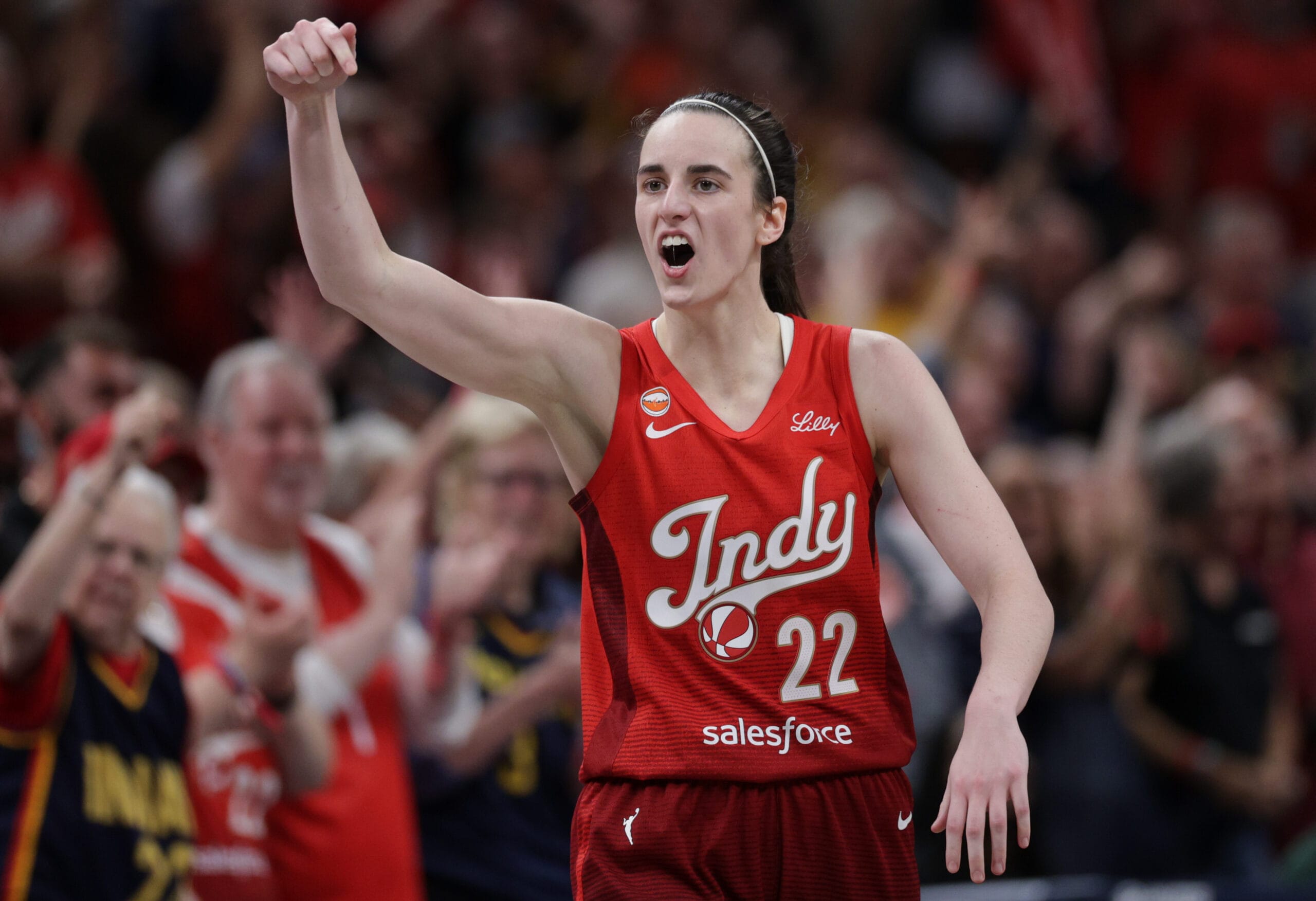
Caitlin Clark #22 of the Indiana Fever
After a slower start to the year from the third-year guard, Caitlin Clark has stormed into the MVP race alongside a surging Indiana Fever team.
After an injury-riddled 2025, which saw her barely take the floor, Clark has returned with averages of 22.1 points per game, 8.3 assists (leading the league), and 3.8 rebounds. Her true shooting percentage of 60.6 is really solid, considering her efficiency woes early in her WNBA career and the fact that she has the second-highest usage in the league among players with at least 30 games played (30.9 percent).
Thanks in part to Clark, Indiana is steadily climbing the standings. They’re currently in third place, seeking to stave off the Aces for the third seed. They do have the seventh-hardest schedule remaining based on their opponent’s winning percentage, which could be a thorn in their side with the Aces holding the easiest remaining schedule by far.
An area of Clark’s game that remains an issue is her turnovers. She leads the league there, and there have been a few occasions in clutch time when Clark has been unable to close games out because of costly turnovers. She’s accepted responsibility in this area, but it’s definitely a knock on her MVP campaign – you can’t be the most valuable member of your team if you’re also the most hurtful in moments of major need.
Turnovers aside, her impact on the Fever based on on/off data is also a bit concerning. Indiana’s net rating with Clark on the court is 5.3. Off the court, it rises to 11.3. That makes her the third-most negatively impactful player on their net rating so far this season.
Of course, her heater of a run throughout August so far has helped propel her up this ladder. This month, Clark is averaging 23.7 points per game and 9.3 assists, while the team is 5-2 heading into their final few contests ahead of the FIBA World Cup break. Indiana also leads the league in points per game (96.4), field goal percentage (48.8), and offensive rating (115), all areas Clark has been impacting with her play lately.
As mentioned, Indiana’s upcoming schedule could be what boosts her case, but it’ll be hard for her to overcome the story that is Miles’ ROTY case getting folded into an MVP run, or Wilson’s strong quest for her fifth MVP honor. It’s difficult for guards – guards weaker defensively, at that – to leapfrog players like Wilson in this regard.





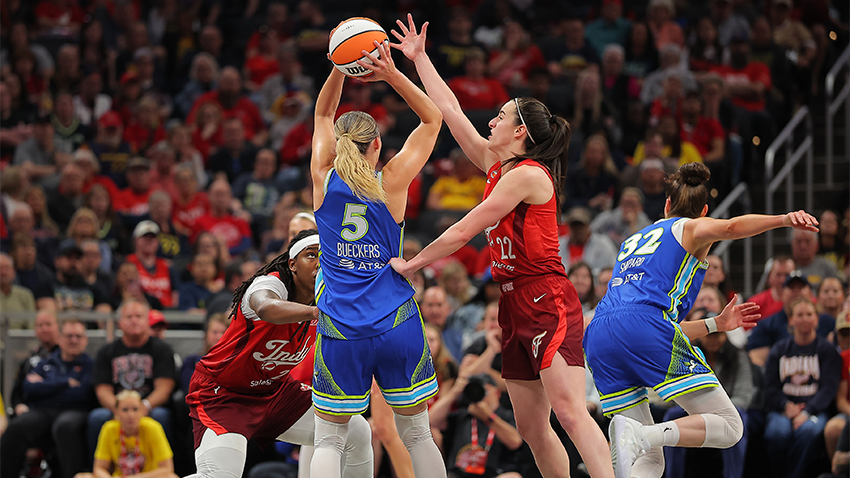,xPosition=.5,yPosition=.5)
,xPosition=.5,yPosition=.5)
,xPosition=.5,yPosition=.5)
,xPosition=.5,yPosition=.5)